Quantum Computing / Notes / Introduction
Introduction to Quantum Theory and Its Foundations
This session provides a foundational overview of quantum theory, tracing its origins, significance, and why it emerged as a necessary framework beyond classical physics. It highlights the differences between Newtonian physics and quantum physics, explains the dual nature of light, introduces fundamental particles, and previews quantum computing’s relationship with quantum theory.
1. Origins and Purpose of Quantum Theory
Quantum theory developed to address phenomena classical physics could not explain, especially at microscopic scales. The focus is on understanding why classical Newtonian mechanics, successful until the early 20th century, needed to be extended.
- Classical physics (Newtonian mechanics) was formalized around the late 1600s and early 1700s, providing laws explaining gravity, motion, and structure.
- Newtonian laws underpin much of engineering, including the design of machines and structural strength.
- Despite its success, Newtonian physics fails to explain behaviors of very small particles like atoms and subatomic particles.
- Quantum theory arose to explain the behavior of this microscopic realm.
2. Transition from Classical Physics to Quantum Theory
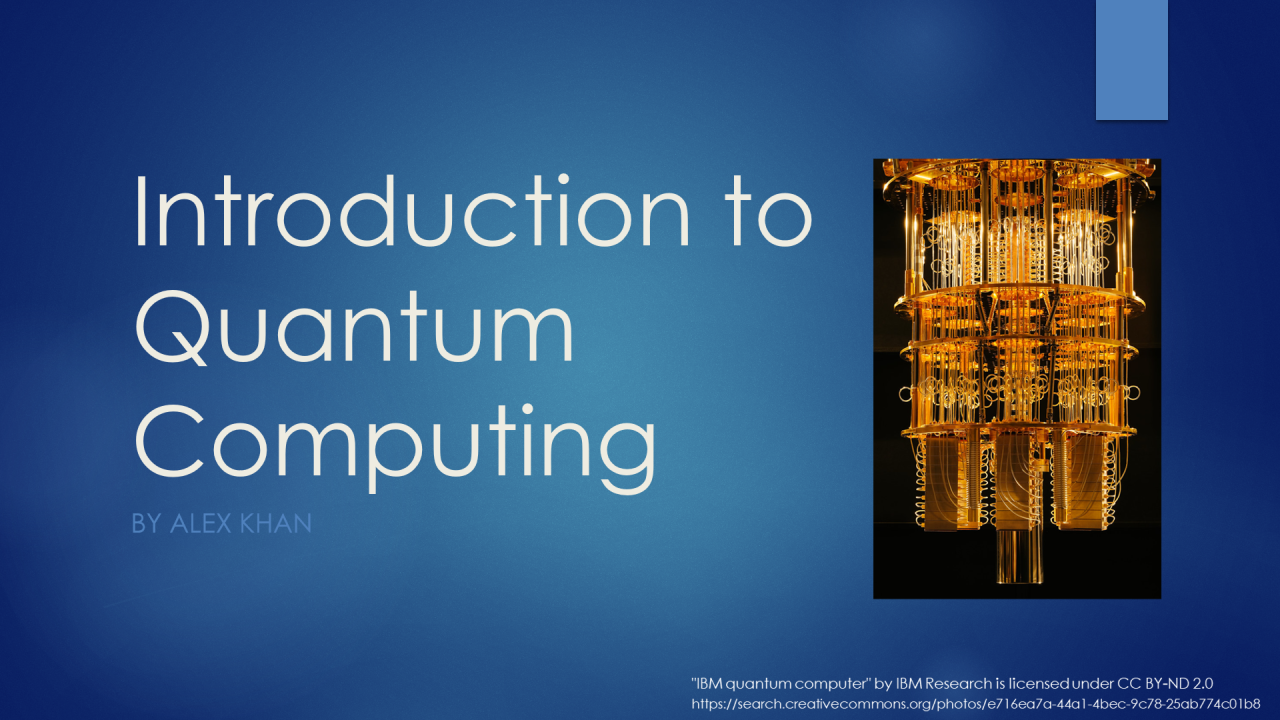
The classical paradigm was challenged by observations related to tiny atomic and subatomic particles and the nature of light.
- Atoms consist of protons, neutrons, and electrons.
- Electrons conduct electricity; understanding them required new physics.
- Light and electromagnetic waves were found to exhibit behaviors that classical physics could not adequately explain.
- Light displays wave-particle duality: it behaves both as waves and particles (photons).
- The discovery of light’s dual nature and the inability of classical laws to predict phenomena like photoelectric effect necessitated quantum theory.
3. Wave-Particle Duality and Its Implications
The dual nature of light is a cornerstone of quantum mechanics and exemplifies how quantum theory extends classical concepts.
- Light behaves as an electromagnetic wave with a characteristic wavelength (visible light wavelengths are very small, on the order of 10^{-7} meters).
- Simultaneously, light is composed of discrete quanta called photons.
- This discovery explained many phenomena, such as the photoelectric effect, for which Albert Einstein won the Nobel Prize.
- Quantum theory introduces the concept that entities can simultaneously exhibit both wave-like and particle-like properties.
4. Key Experiments Leading to Quantum Theory
Two landmark experiments showcased light’s duality, prompting the development of quantum theory.
| Experiment | Description | Outcome |
|---|---|---|
| Davisson-Germer | Laser light passed through a small slit generates interference patterns (waves) | Confirmed wave-like behavior of electrons/light |
| Photoelectric Effect | Observed that light ejects electrons like particles from metal surfaces | Established particle-like properties of light |
- These contradictory behaviors could not be reconciled by classical physics.
- Albert Einstein’s explanation using photons provided a solution.
5. Limitations of Classical Physics and Features of Quantum Theory
Quantum theory differs from classical physics in that it includes probabilistic predictions rather than deterministic ones.
- Newtonian physics can determine exact outcomes (e.g., predicting the exact time it will rain).
- Quantum mechanics is probabilistic: outcomes like particle position or event occurrence are predicted in terms of probabilities, e.g., a 70% chance.
- This inherent uncertainty is a fundamental feature of quantum theory, not due to lack of knowledge.
6. Practical Applications of Quantum Theory
Quantum theory is essential for explaining and developing advanced technologies involving very small scales.
- Classical laws suffice for large objects; quantum theory is necessary primarily for atomic and subatomic scales.
- Everyday devices and phenomena like LED lights rely fundamentally on quantum mechanics.
- Quantum theory underpins ongoing advancements in electronics and photonics.
- Quantum computing leverages unique quantum states such as superposition (where particles exist in multiple states simultaneously) to perform computations faster than classical computers.
7. Introduction to Quantum Computing and Future Discussions
Quantum computing utilizes quantum mechanical phenomena to improve computational efficiency.
- Quantum computers embed quantum theory principles as the basis for processing and output generation.
- The presenter promises deeper dives into the quantum mathematics, specific particle behavior (photons), and quantum computing concepts in future sessions.
- The educational series aims to cover foundational physics and practical applications with supplementary materials online.
- An open-source collaborative platform is used for sharing notes and facilitating bilingual Tamil-English discussions.
Summary Table: Classical vs Quantum Physics
| Aspect | Classical Physics (Newtonian) | Quantum Physics |
|---|---|---|
| Scale of Applicability | Macroscopic objects | Atomic and subatomic scales |
| Nature of Predictions | Deterministic (exact outcomes) | Probabilistic (statistical outcomes) |
| Nature of Light | Wave only | Dual nature: wave and particle (photon) |
| Particle Behavior | Particles distinct from waves | Particles can exhibit wave-like properties |
| Example Applications | Mechanics, structural engineering, classical electronics | LED technology, quantum computing, photoelectric effect |
Key Insights
- Quantum theory complements classical physics where the latter fails, especially at very small scales.
- The wave-particle duality of light was a revolutionary discovery prompting quantum mechanics.
- Quantum mechanics introduces probabilistic models replacing classical determinism.
- It has practical implications in modern electronics, photonics, and the emerging field of quantum computing.
- This lecture series is designed to build up understanding gradually, starting with basic concepts before moving to mathematical formulations and applications.
The introductory session offers a conceptual framework preparing learners for detailed explorations of quantum particles, superposition, and quantum computing in subsequent lessons. An online collaborative environment supports ongoing discussion and deeper inquiry.
Further reading
Updated 11 Nov 2026